
How Lightning Protection Works
Understanding Lightning Protection Systems ⚡
Lightning is one of nature’s most powerful electrical events. It is a high-voltage electrical discharge that can occur between a cloud and the ground or even within a cloud, usually accompanied by a bright flash and the sound of thunder. In the United States alone, lightning strikes about 25 million times each year, causing property damage, injuries, and in some cases death.
Because of the risks lightning creates, properly designed lightning protection systems play an important role in protecting buildings and the people inside them. A common misconception is that these systems attract or repel lightning. In reality, they do neither. A lightning protection system is designed to provide a safe, specified path for lightning current to travel so that the destructive energy can be carried safely into the ground.
What Makes Up a Lightning Protection System? 🏗️
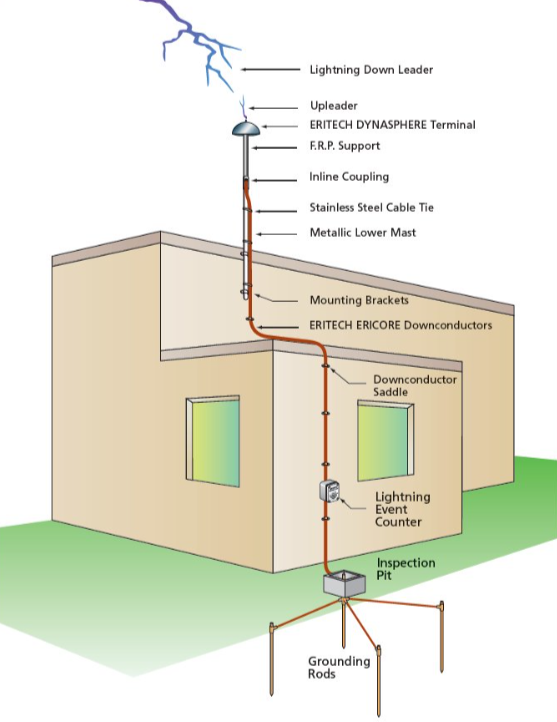
A lightning protection system is made up of five critical elements. According to the presentation, every complete system includes a roof network, down conductors, equipotential bonding, a grounding system, and surge suppression devices on incoming power and communication lines. Each of these components plays a specific role in helping the system function as a complete protective network.
Protection Starts at the Roof 🏠
At roof level, air terminals are one of the most visible parts of the system. These consist of a mounting base and a vertical rod. The bases must be mounted using methods acceptable to the roofing or substrate manufacturer, while the rods must extend a minimum of 10 inches above the object they are intended to protect. The presentation also notes that air terminals should be located as close as practical to roof edges and the ends of ridges, and they may not be set back more than 24 inches.
Conductors Create the Path to Ground 🔗
Lightning protection conductors are heavy-duty copper or aluminum braided cables that interconnect the components of the roof network. Their purpose is to create multiple paths for lightning current to safely travel toward the ground. This redundancy is important because it helps manage the massive electrical energy associated with a lightning strike.
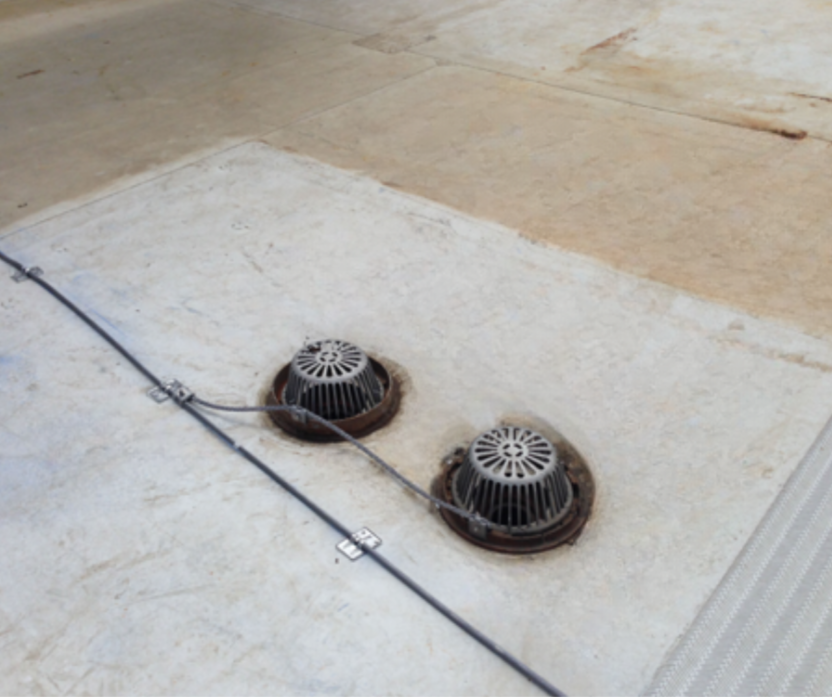
Metal roof drains are bonded to the roof conductor that passes close to them, reducing the risk of dangerous side flashes or ineffective protection.
Bonding Keeps the System Effective 🔩
Another key piece of the system is equipotential bonding. These bonds ensure that metallic elements of a structure are properly connected to the lightning protection system. Without this bonding, the system can become ineffective.
Grounding Is Where the Energy Safely Ends 🌎
A lightning protection system ultimately depends on a proper grounding system. Ground electrodes are installed in direct contact with the earth and are typically driven vertically to a depth of 10 feet. Each down conductor must have its own ground termination point. The number and placement of these terminations depend on the structure’s size and perimeter, but even the smallest structure must have at least two grounding points located at opposite corners.
Surge Protection Matters Too 💻
Lightning damage is not limited to direct strikes. Electrical and communication lines can carry lightning current from miles away into a building. When that happens, the resulting surge can damage or destroy sensitive electronic and digital equipment. As buildings become increasingly dependent on technology, surge protection becomes a critical part of a complete lightning protection strategy.
The Bottom Line ✅
Lightning protection systems that comply with nationally accepted standards are a proven and cost-effective way to protect buildings, their contents, and their occupants. Rather than preventing lightning, these systems manage it by directing the energy safely where it belongs — into the ground. When all the required elements work together, the result is a much safer and more resilient structure.